Better Bookshelf Sound Starts Ten Centimeters From the Wall
Move and compare the speakers you already have before buying more power. A small room can change vocal focus, bass, and usable listening positions.
A familiar recording can sound heavy at one end of a sofa and pleasantly balanced further into the room. That change occurs without anyone touching a tone control. Speaker position, listening position, nearby walls, and objects on the desk all affect what reaches your ears. Moving a box a small distance and listening again is often the quickest way to see which problem your system actually has. Begin with the speakers you own or a pair you can try in the room where they will live.
Write down your main use before pulling furniture around. Voices during desk work may matter more than strong bass at the opposite side of the room. Two people listening on a sofa can need an arrangement that covers a broader area than a single chair centered between speakers. There is no requirement to force every listening position into the same response. Give the everyday one first attention, then check the others before choosing a permanent place.
Make a comparison you can reverse
Find three recordings you know well. Use a centered voice, a bass line with clearly separate notes, and a recording in which several instruments enter at different positions. Leave the playback source, output mode, and tone settings unchanged initially. Set a comfortable level. A louder result can feel more detailed even when the change you made was simply turning the system up. Keep volume close enough that another change is easier to notice.
Mark the existing speaker and chair positions with a removable method appropriate to the floor or furniture. Measure the approximate distance from the back of each speaker to the wall and note the listening height. A brief sketch is enough. If you make several moves, you should still be able to return the room to its first state. An unexplained preference is less helpful when you cannot recreate either arrangement.
Listen through a complete bass phrase from the reference seat. Notice whether one note seems to dominate and another appears weak. Then move the seat a small distance, keeping everything else in place, and see whether the balance changes. Low-frequency energy interacts with the dimensions of the room. A problem concentrated in one position is worth exploring by shifting that position before buying a stronger amplifier.
Improve where the speakers can actually stand
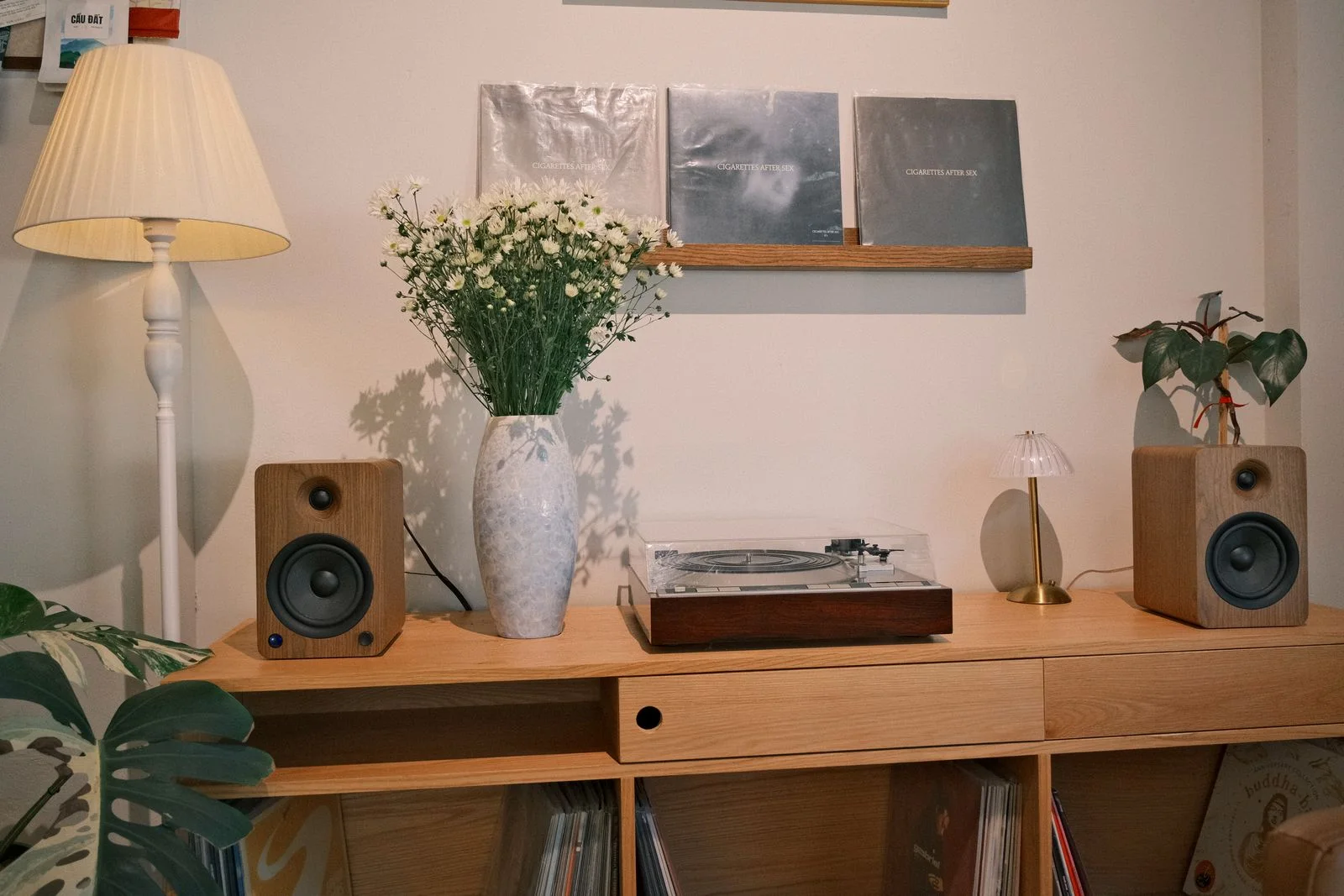
Make sure each speaker has a secure surface suited to its weight and intended use. Bookshelf speakers are often sold to people who put them on stands, desks, and other furniture. Follow the manufacturer's instructions for orientation, ventilation, and any port clearance. Leave room for connections so a stiff cable cannot push the cabinet forward over time. Several inches of usable desk space can determine more than an ideal placement chart.
Try moving the speakers forward in equal, measured steps if their support and cabling allow it. Ten centimeters is a sample adjustment to compare with your starting position. Follow the manufacturer's clearance guidance and choose a smaller step when space is limited. Play the same bass phrase each time and use the same seat. A wall can make bass stronger in certain areas, and changes in distance can alter cancellations as well. The speaker may sound more substantial near the wall and better balanced farther away. The direction of the improvement depends on the room and the notes involved. Keep the path reversible and make notes after each short trial.
If the room forces one speaker into a corner and gives the other open space, compare how each side sounds separately with familiar material and the same reasonable level. Unequal surroundings can make a stereo pair feel tilted even with identical equipment. Look for a modest adjustment to placement, seat, or approved settings. Rolling the entire setup into the same distant ideal position will be irrelevant if a doorway or desk makes that place unavailable.
Aim for a stable voice and useful width
Place both speakers so that the normal listening position has a reasonably similar view of each one, where the room permits. Choose a centered voice and listen from the chair with the pair operating together. Mark a beginning angle and turn both speakers inward a little. Try another listening pass. An inward angle can change how much direct high-frequency sound reaches you and affect what nearby surfaces reflect. A listener to the side may experience a different result than the person in the middle.
Ask a second listener to sit where they would normally sit. See whether the voice still seems to come from a reasonable place and whether instruments remain easy to follow. Some positions make the centered image very clear but localize much of the sound to the nearest box when you move sideways. If people use a broad sofa, they may prefer somewhat less focus in the center. A stereo arrangement can trade a sharp point for a more even useful area.
Check height before changing the angle again. A tweeter aimed well above or below the typical ear position can sound different from one aligned as the manufacturer recommends. Put speakers on approved, stable supports and avoid improvised stacks that can tip. Compare seated and standing at a comfortable distance. The direct path can matter more than another brand of cable, especially when a monitor or tall object blocks one cabinet.
Listen to the furniture under the speakers
A desktop can reflect sound early and a cabinet can vibrate along with bass notes. Tap no equipment while it plays. Instead, listen to a promising recording at ordinary levels, then check whether a loose object or door is making an audible noise. Move the object or close the door and repeat. A noise that stops when you steady a drawer belongs to the room, whatever started the vibration. Removing the distraction can make speech seem clearer without changing the speaker.
Follow product guidance when choosing pads or supports. Stable cushioning can protect a surface or restrict certain vibrations, depending on the design. It cannot solve every problem caused by reflected sound. Hear the difference from your normal seat before spending much on treatment. A reflected path can also change if you move a cabinet height, shift the speakers, or adjust the desktop layout. Measure enough to reproduce any useful arrangement later.
Test from the nearby workspace during a real activity. A listener reading at a computer can hear a different balance from a listener sitting upright in exactly the same chair but looking straight ahead. A second monitor, a raised laptop stand, and even the position of a large book can change the geometry. Use the desk as a desk for a while, then listen to whether the center voice keeps its place while you move normally.
Change equipment after naming a remaining problem
A successful experiment may leave you with a specific limit. Perhaps the speakers cannot reach an acceptable level at the far chair without a strained sound. Perhaps the usable low range is too limited for the music you listen to, or the physical boxes take space you need. Those observations lead to different shopping lists. A system that sounded vague before placement may need no new component at all once the position makes sense.
If you try a replacement pair, preserve the successful speaker and listening positions for one reference pass. Then try the placement recommended for the new set. Give both pairs enough attention to function in the room. Compare with a similar listening level and choose the actual recordings you use, including one you like for reasons other than its sound quality. A system serving daily pleasure should make that recording easy to enjoy.
A tone setting can be useful once placement has done what it can. Use a small adjustment supported by the device and compare from several places. A severe boost at a poorly heard frequency may create more sound elsewhere without changing the listening position enough. Check another seat and record which correction is worthwhile. Someone else should still be able to enjoy the room when the original tester leaves the center chair.
If a pair has a selectable boundary or room setting, listen to the recommended position once without changing that setting, then change the setting alone. Keep familiar recordings long enough to hear both quiet and strong notes. A position and a switch can interact, and listening to both changes at once can make the result hard to recover later. Save whichever combination survives listening from the two seats you care about. If a control works differently for the left and right speakers, record their settings individually. The two cabinets may be identical while their surroundings are plainly different.
Leave the room ready to use
Write down the position and orientation worth keeping. Label inputs if the system shares sources and leave the volume in an appropriate state when you finish. Return the furniture to a safe arrangement, with cables clear of doors and walking routes. Save a photo of the positions if you will move the setup again. Everything needed to recover a good listening experience should fit in one note.
The finished room lets a singer begin without drawing you back to the controls. You can play music at a comfortable level, hear a useful amount of detail, and sit in the places you actually inhabit. The best improvement may have taken no more space than a short move forward, a change of angle, or a seat kept away from the spot where one bass note used to swallow the rest.